
Calgary & Edmonton Insulation Removal — Attics, Walls & Pre-Renovation Clearance
Not every insulation project starts with installation. Sometimes the first step is clearing out what’s already there — whether it’s damaged beyond recovery, contaminated, blocking access to a vapour barrier that needs work, or simply so old and compressed that it’s contributing nothing to your home’s thermal envelope.
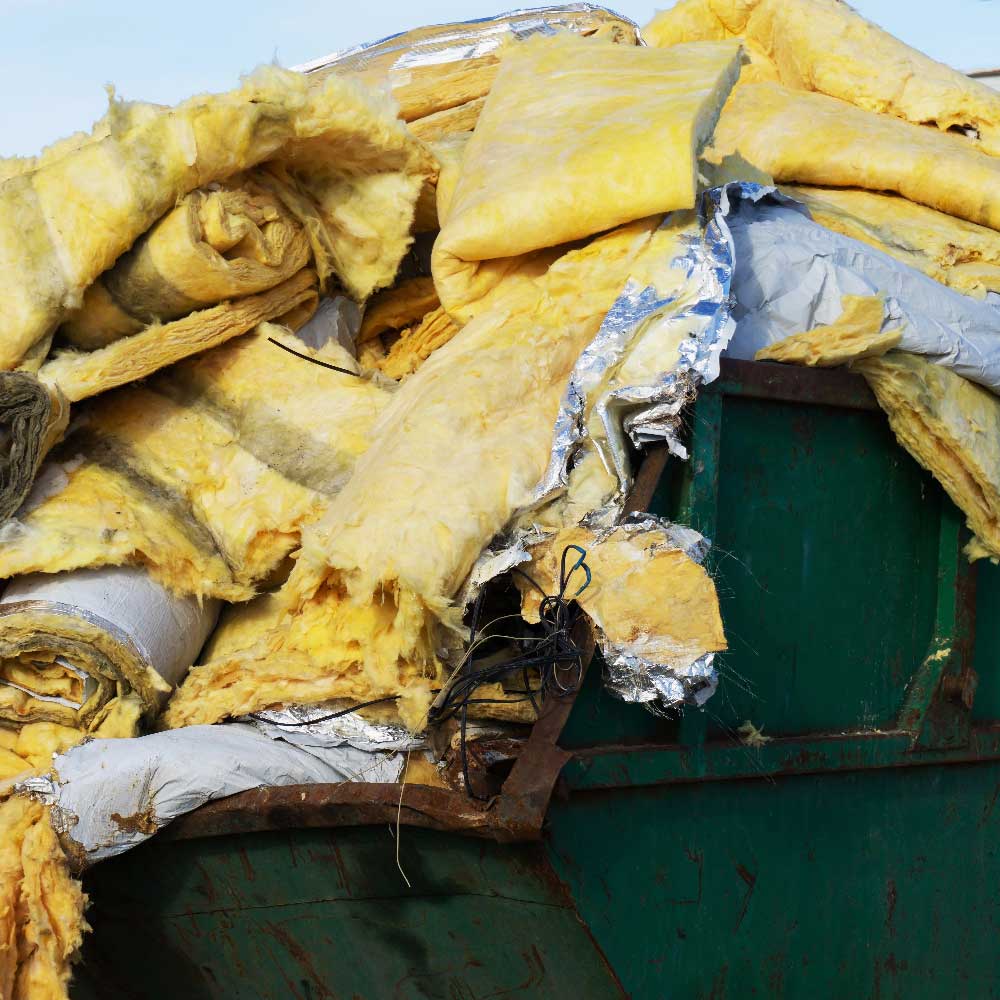
IDEAL removes fiberglass loose-fill, cellulose, wood chip insulation, and batt materials from attics, walls, and other areas using high-powered vacuum equipment that extracts material quickly and with minimal disruption to the rest of your home. All debris is bagged and disposed of off-site. The space is left clean and assessed before we recommend next steps — whether that’s a straightforward blown-in top-up, a vapour barrier repair followed by reinstallation, or a more complex remediation scenario.
Every removal project is inspected and quoted individually. The type of material, the volume, the access conditions, and any complicating factors (moisture damage, suspected contamination, structural access requirements) all affect the scope and price. You’ll always receive a written quote before any work begins.
Why Choose IDEAL for Insulation Removal?
The most practical reason to choose IDEAL for insulation removal is that we also do the reinstallation. You don’t need to find one contractor to take the old insulation out, assess the vapour barrier, and leave the space clean — and then find a second contractor to come back and put the new insulation in. IDEAL handles the full scope: assessment, removal, vapour barrier repair or spray foam air sealing if needed, and reinstallation to the right R-value with the right product. One quote, one crew, one point of contact.
Do You Actually Need Insulation Removed? — An Honest Guide
One of the most common questions we get is whether removal is necessary before new insulation is installed. The honest answer: not always. In many attic top-up projects, blown-in fiberglass can go directly over existing insulation without any removal at all. But in certain situations, removal is the only correct path. Here’s how to think about it:
Moisture Damage & Mould — When It Can’t Be Dried Out
Moisture-damaged insulation is the most common reason for removal on renovation and repair projects. If your attic has had a leak, sustained condensation damage over many winters, or developed mould in the insulation or on the roof deck, the insulation needs to come out so the underlying problems can be addressed properly.
In some cases, if the moisture source has been resolved and the insulation is only mildly affected, it can dry out and be insulated over. Our estimator will assess the specific conditions and advise honestly. Where removal is needed, we vacuum out the existing material, allow the attic to dry, and work with you on addressing the underlying moisture or ventilation issue before reinstallation.
Vapour Barrier Repair — Clearing the Floor for Access
If your attic’s vapour barrier is inadequate, improperly sealed, or damaged — a common finding in homes built before current Alberta Building Code standards — correcting it typically requires removing the existing insulation to access the attic floor. From there, 2-pound closed cell spray foam can be applied directly to the attic floor to create a code-compliant vapour barrier at all penetrations, after which new insulation is blown in on top.
This is a common sequence on attic renovation projects: assessment → insulation removal → spray foam vapour barrier work → blown-in reinstallation. IDEAL handles all four stages.
Pest Contamination — Full Removal Required
Insulation that has been used as nesting material by rodents, or that contains rodent droppings, urine, or carcasses, must be fully removed. It cannot be insulated over — the contamination creates a health risk and the disturbed material loses its R-value and structural integrity. Full removal, disposal, and sanitisation of the attic space is required before any new insulation is installed. Our team follows appropriate PPE protocols for contaminated removal scenarios.
Signs Your Attic Insulation Needs to Come Out
Most homeowners don’t know the condition of their attic insulation until something goes wrong. These are the most common warning signs that the existing insulation can’t simply be topped up — and needs to be removed first:
Insulation Removal — What to Expect
Before Your Removal
All insulation removal projects are inspected before quoting. Before the crew arrives, remove any personal belongings stored in the attic and ensure the attic hatch is accessible. If the hatch is in a closet, clear out the space below it.
During the inspection, our estimator will:
The Removal Process
Most standard attic removals on homes up to 2,500 sq ft are completed in a single day. Larger or more complex projects — heavily contaminated attics, significant moisture damage, attics with stored items — may take longer. We’ll give you a clear timeline when we quote.
WE DON’T HAVE TO TELL YOU HOW GOOD WE ARE, OUR CUSTOMERS DO THAT FOR US.
“We discovered our attic had a slow roof leak that had been going on for years — the insulation was wet, mouldy, and had to come out entirely. IDEAL handled the full scope: removal, drying, vapour barrier repair with spray foam, and reinstallation to R-60. One crew, one invoice, and the attic is now in better shape than it’s ever been. The crew was incredibly clean and careful with our home throughout.”
Jennifer & Paul S.
Google Review — Attic Insulation Removal & Reinstallation, Calgary
“Had an energy audit done that revealed our attic vapour barrier was essentially non-functional. IDEAL removed the old insulation, applied 2-pound spray foam to the attic floor to address the vapour barrier issues, then blew everything back in to R-55. The whole project was explained clearly at every stage. We’re already noticing the difference in how the house holds heat.”
Martin L.
Google Review — Vapour Barrier Remediation & Re-Insulation, Edmonton
“We bought a home that turned out to have rodent damage in the attic. The previous insulation had to come out completely. IDEAL removed it all, cleaned and sanitised the space, sealed every entry point, and re-insulated with blown-in fiberglass. They were thorough, professional, and the crew was remarkably careful about keeping the rest of the house clean. We’d use them again without hesitation.”
Alison T.
Google Review — Attic Contamination Removal & Re-Insulation, Calgary
Insulation Removal — Frequently Asked Questions
No — and this is one of the most common misconceptions about insulation upgrades. In most attic top-up projects, blown-in fiberglass can be installed directly over existing insulation without any removal, as long as the existing material is in reasonable condition, dry, and the vapour barrier is intact. Removal is specifically necessary when the existing insulation is damaged, wet, mouldy, contaminated, or when the vapour barrier needs to be repaired and can’t be accessed without clearing the attic floor first.
The clearest indicators are: water staining on ceilings, evidence of moisture or mould in the attic, rodent activity, a home inspection report flagging damaged or inadequate insulation, recurring attic rain or ice dams, or the presence of old insulation types that may be degraded or contaminated. Our estimator will assess the specific conditions during a free inspection and give you an honest recommendation — we’ll tell you if removal isn’t necessary, and we’ll tell you if it is.
We remove fiberglass loose-fill, cellulose (blown-in), wood chip insulation, and fiberglass or Roxul batt materials. We use high-powered vacuum equipment for loose-fill products and hand removal for batt products. All material is bagged and disposed of off-site.
Do not disturb it and do not allow contractors to work in the attic before it has been assessed. Vermiculite is a grey, pebble-like material that looks like small gravel or stones. A significant portion of vermiculite sold in Canada before the 1990s was contaminated with asbestos from the Libby, Montana mine. If you suspect vermiculite, contact us for a visual assessment. We will identify the material and advise on the appropriate next steps, which may include referral to a certified asbestos abatement specialist.
Yes — and this is the approach we recommend wherever possible. Handling both sides of the job as a single project means one crew who knows the full scope, one written quote, one invoice, and no risk of a coordination gap between the removal contractor and the reinstallation contractor. After removal, our estimator reassesses the attic floor and confirms the reinstallation scope before any new product goes in.
Most standard attic removals on homes up to 2,500 sq ft are completed in a single day. Attics with significant contamination, heavy moisture damage, or large volumes of material may take longer. We’ll give you a clear timeline during the quoting inspection.
All removed insulation is bagged on-site and taken off-site for proper disposal by our crew. We do not leave disposal bags at the property. For contaminated materials (rodent droppings, mouldy insulation), additional containment protocols are used during removal and disposal. For hazardous materials such as confirmed asbestos-containing vermiculite, disposal is handled according to applicable Alberta regulations by a certified abatement specialist.
Yes. We have offices and crews in both cities and have been providing insulation removal and reinstallation services across both markets for over 44 years.